📋 Learn Moringa Page — Editor Guide
Page: Learn Moringa · ID 66 · /learn-moringa/
Theme block: morifa/learn-moringa (server-side rendered via render.php)
✏️ How to Edit Content
All text on this page is stored as block attributes — not as Gutenberg post content. To edit:
- Click the green block canvas in the editor
- Open the Settings sidebar (top-right ⚙ icon)
- Expand the panels: ① Hero, ② Hub Cards, ③ Plant Section, ④–⑨ Tab panels (Leaves / Seeds / Oil / Pods / Roots / Flowers), ⑩ FAQ, ⑪ CTA
- Edit any text field and click Update to save
🗂️ What Each Section Controls
Hero: eyebrow label, main heading, subtitle text.
Hub Cards (1–4): title, description, and link URL for each knowledge-hub card.
Plant Section: section eyebrow, heading, intro paragraph.
6 Plant Tabs: each tab has 2–3 paragraphs, a “Did You Know?” callout, and 5 stat bullet points.
FAQ (10 items): question and answer text for each accordion item.
CTA: heading, subtitle, button text, and button URL.
⚠️ Warnings — Do NOT Do This
- Do NOT delete the
morifa/learn-moringablock — all content lives inside its attributes. Deleting it wipes the entire page. - Do NOT replace it with a paragraph or other block type.
- Do NOT edit
render.phpdirectly unless you understand PHP — it contains the full HTML structure and helper functions. - Do NOT edit
editor.jsunless you understand React/Gutenberg — it powers the sidebar controls.
🖼️ Images
The hero background image and plant-tab images are hardcoded in render.php referencing the WP Media Library. To change images: upload to WP Admin → Media and update the URL in render.php accordingly.
This notice is hidden on the live front-end. Visible in WP editor only.
MORINGA KNOWLEDGE CENTER
What Is Moringa?
Explore the science, nutrition, and applications of the world's most nutrient-dense plant.
Moringa: The Miracle Tree
New to moringa? Start here — discover the plant that has quietly nourished communities for centuries.
Moringa Science: Research & Studies
Peer-reviewed research, clinical trials, and scientific evidence on moringa's benefits.
Moringa Articles
Insights, guides, and stories about the world's most powerful plant — updated regularly.
Moringa by Industry
Discover how moringa is applied across industries — from cosmetics to food, supplements to agriculture.
MORINGA THE MIRACLE TREE
The Complete Plant
Every part of the moringa tree offers unique nutritional and bioactive compounds. Discover the science behind nature's most nutrient-dense plant.
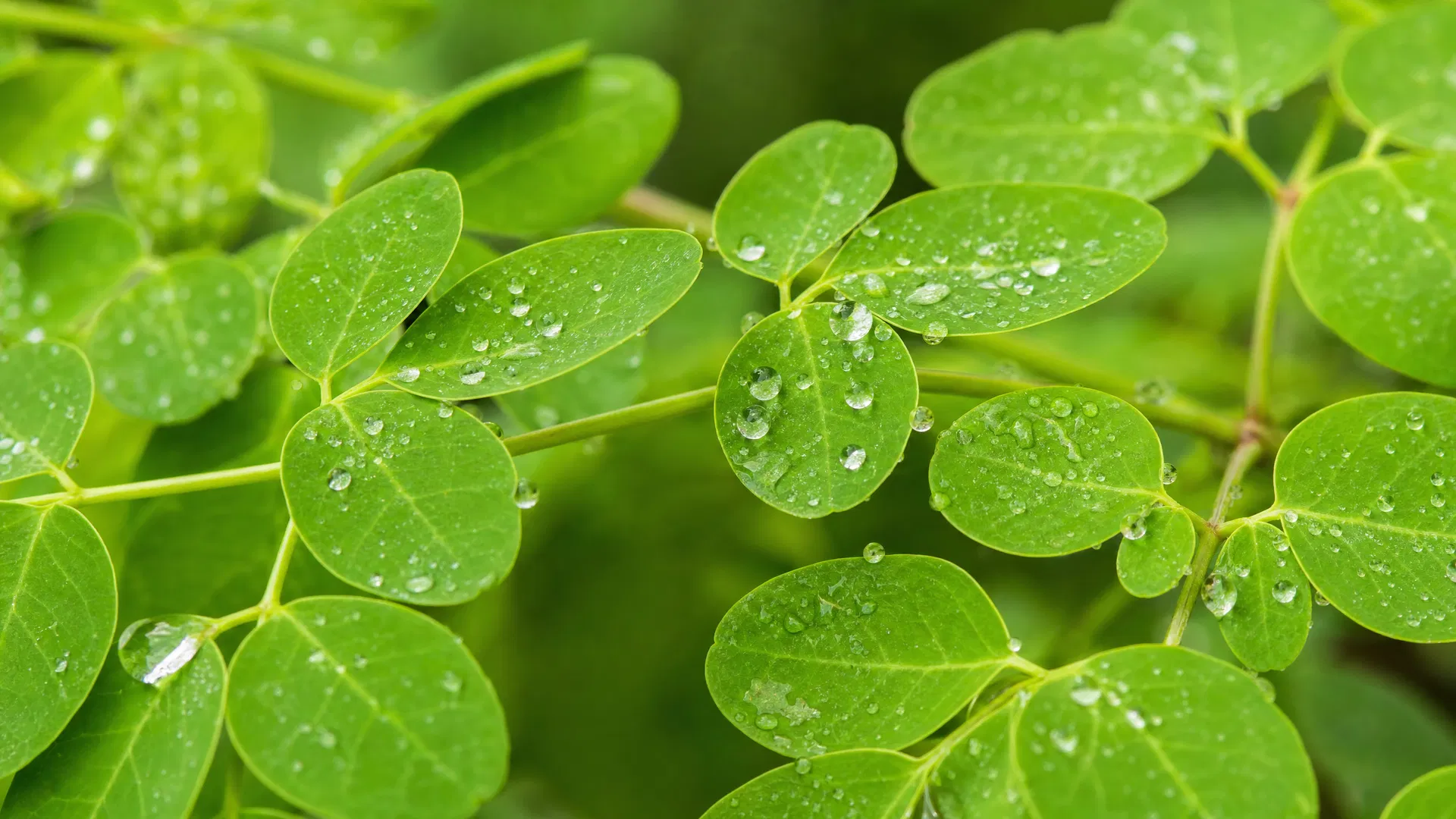
Imagine a tree so generous it has fed entire villages for centuries. The leaves of the Moringa tree are perhaps nature's most concentrated package of nutrition — small, tender, and brilliant green, they have been treasured across Africa and Asia as a source of life for mothers, children, and the elderly alike.
Moringa leaves contain all nine essential amino acids, making them one of the rare plant sources of complete protein. They are exceptionally rich in Vitamin C (seven times more than oranges), Vitamin A (four times more than carrots), calcium (four times more than milk), and iron (three times more than spinach) — all packed into one small, unassuming leaf.
Whether dried, powdered, or used fresh, moringa leaves are added to teas, smoothies, soups, energy bars, baby food, and nutritional supplements around the world. They are a gentle, plant-based way to support energy, immunity, and everyday vitality.
💡 Did You Know? Gram for gram, moringa leaves contain more iron than spinach, more calcium than milk, and more Vitamin C than oranges — all from a single plant.
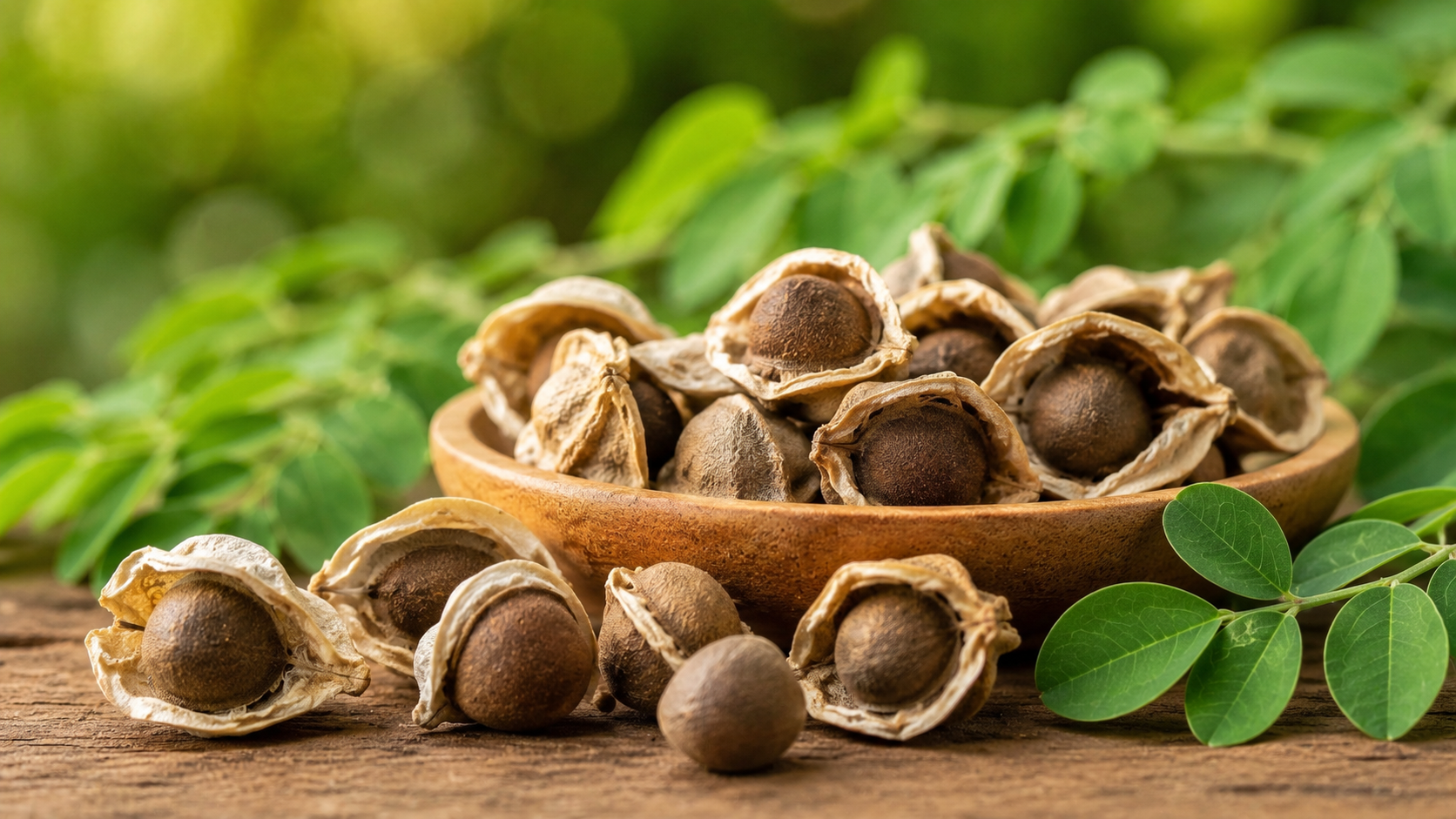
Hidden inside the long, slender pods of the moringa tree are seeds that have quietly served humanity for thousands of years. Ancient Egyptians used moringa seed oil to protect their skin from desert winds. Farmers across Africa and Asia have long used crushed moringa seeds to purify drinking water. And today, the beauty industry is rediscovering them as one of nature's finest skincare ingredients.
Moringa seeds are cold-pressed to yield a light, golden oil with an exceptionally high oleic acid content — deeply moisturising, naturally stable, and shelf-friendly without preservatives. The pressed seed cake remaining after extraction is also used in water purification and animal feed — a reminder that almost nothing from this tree goes to waste.
💡 Did You Know? Moringa seeds can clarify turbid water. Crushed seed powder causes impurities to clump together and sink — a natural water purification method still used in parts of Africa today.
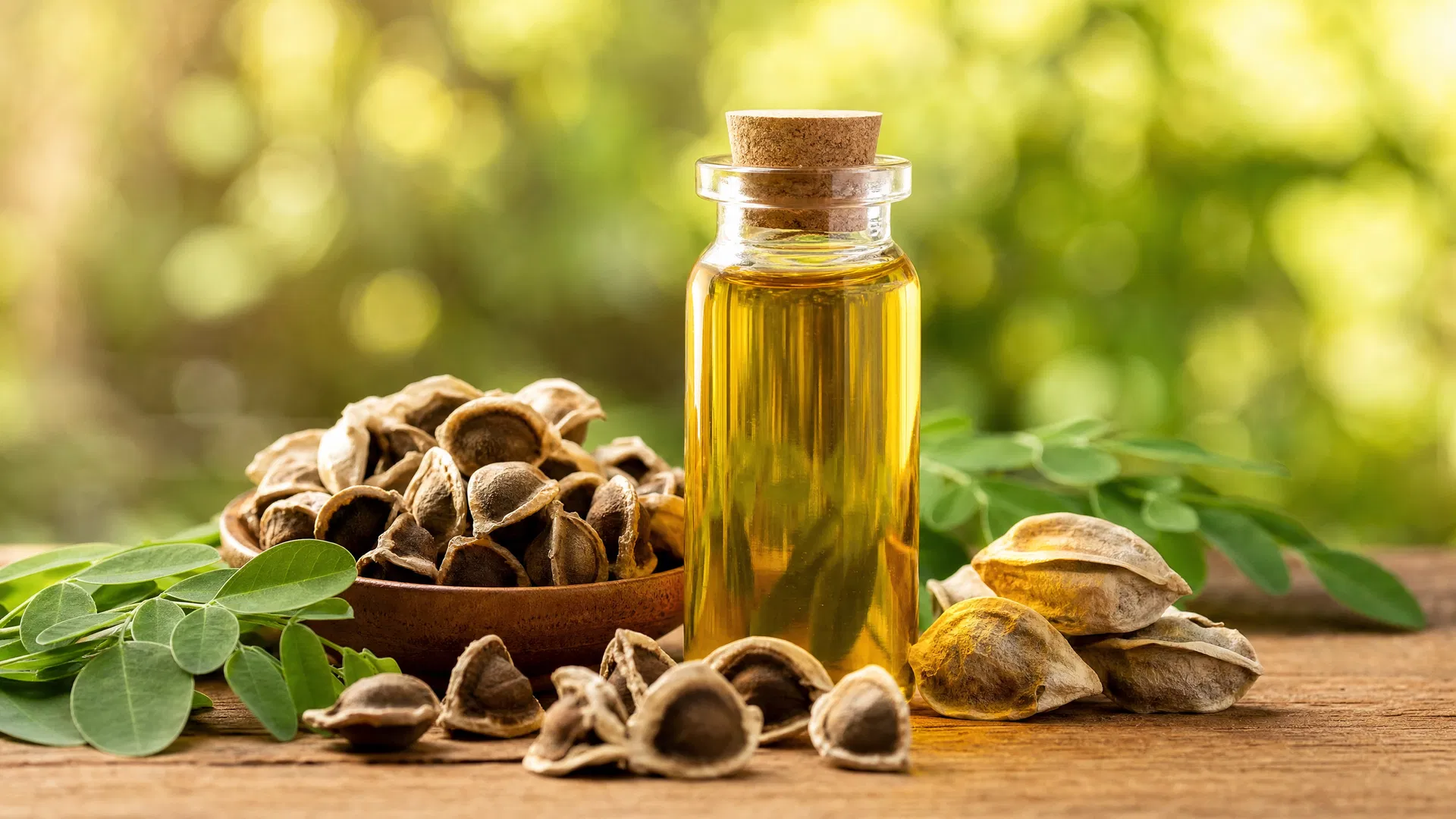
If moringa leaves are the tree's gift to nutrition, moringa oil is its gift to beauty. Cold-pressed from the seeds, moringa oil is one of the most prized ingredients in premium skincare and haircare — valued for its purity, its ability to absorb quickly into skin without greasiness, and its remarkable natural stability.
Rich in oleic acid (omega-9), behenic acid, and antioxidants, moringa oil moisturises deeply, calms inflammation, and protects skin from environmental stress. Unlike many plant oils, it has an exceptionally long shelf life due to its natural antioxidant content — no artificial preservatives needed.
MORIFA's TIMOR MORINGA® — cold-pressed exclusively from moringa seeds grown on the island of Timor, Indonesia — takes this even further. Lab results show it contains significantly higher levels of Vitamin A and beneficial fatty acids than moringa oil from other origins, with a distinctively pleasant natural earthy scent.
💡 Did You Know? MORIFA is the only producer of TIMOR MORINGA® oil in the world — making it one of the rarest botanical oils available anywhere.
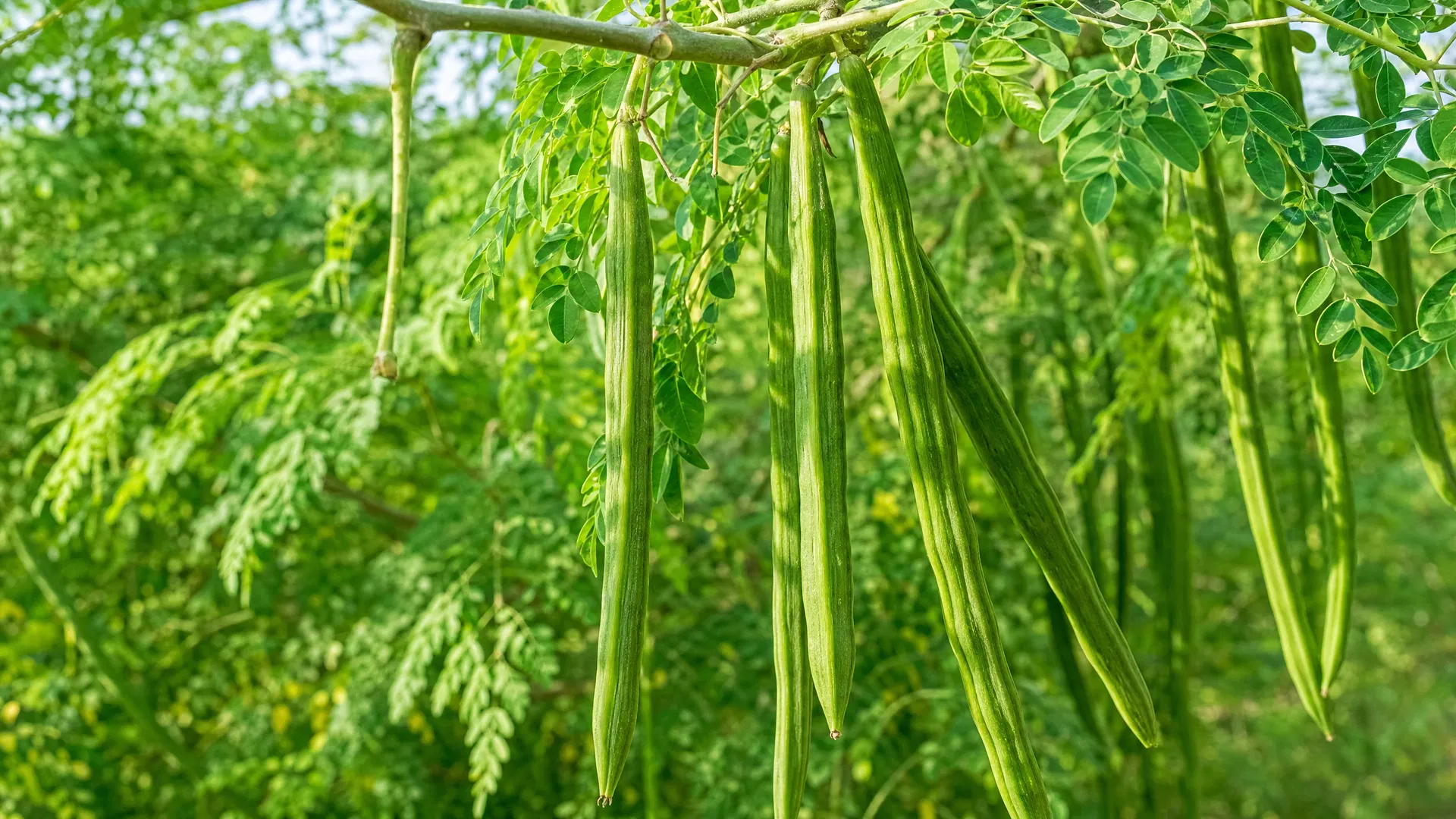
Before the moringa tree produces its seeds, it bears long, slender green pods — known in many cultures as "drumsticks" — that are a beloved ingredient across South and Southeast Asian cooking. If you have ever eaten a curry from southern India or Sri Lanka, there is a good chance moringa pods found their way into your bowl.
Mild in flavour and slightly fibrous in texture, moringa pods are rich in dietary fibre, Vitamin C, and B-vitamins. They are typically cooked whole in curries and soups, with the soft inner flesh scooped out and savoured. Humble in appearance, extraordinary in nourishment — the moringa pod is a quiet symbol of everything this tree represents.
💡 Did You Know? In India, moringa pods are called "drumsticks" because of their long, thin shape — and they are used in one of the country's most beloved dishes: sambar, a lentil-based soup eaten daily across millions of households.
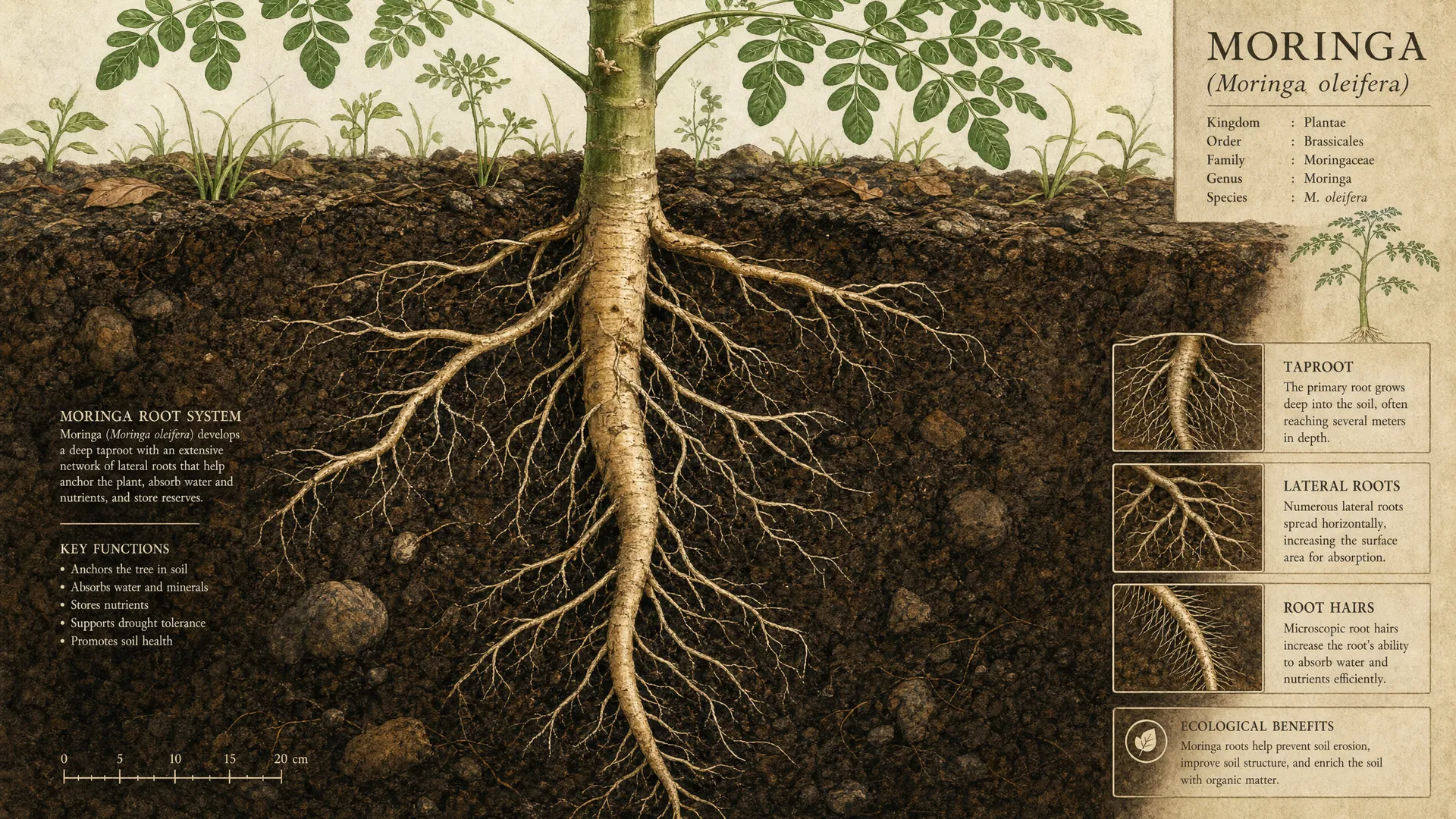
Go deep enough into the moringa tree, and you find one of traditional medicine's most enduring secrets. The roots and bark have been used for centuries in Ayurvedic medicine and healing traditions across Africa and Asia — valued for their anti-inflammatory, antimicrobial, and digestive properties.
Compounds found in moringa root bark have been studied for potential antibacterial and antifungal activity. In some traditions, moringa root extracts are used to support circulation, digestion, and joint health. Research into the therapeutic applications of moringa root and bark is an area of growing scientific interest today.
A note of care: the roots and bark are significantly more potent than the leaves and should be used with guidance from a health professional.
💡 Did You Know? The moringa tree is sometimes called the "Never Die Tree" because even when cut down to a stump, it regrows rapidly — its roots carrying enough stored energy to begin again.
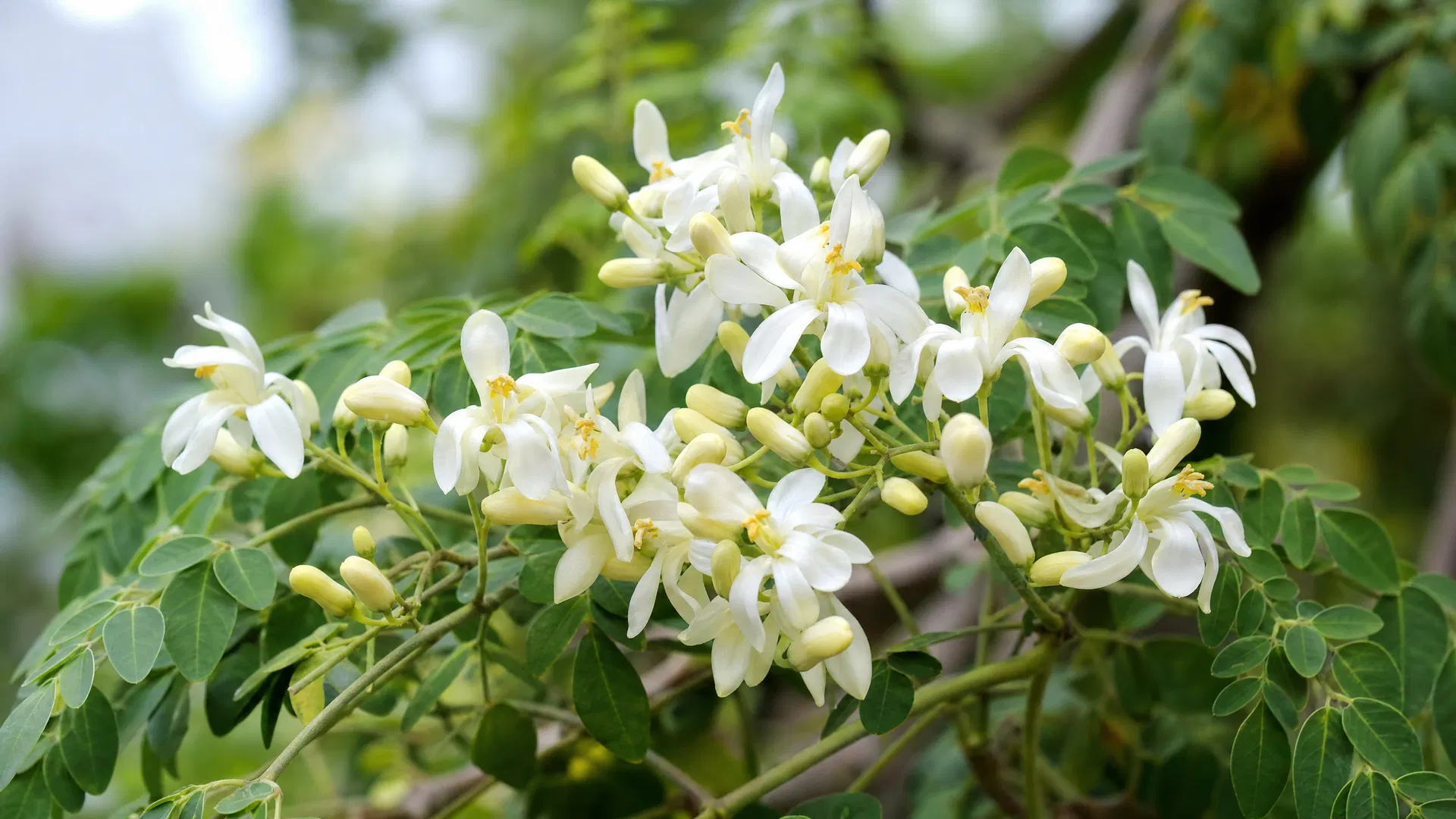
Perhaps the least known — and most quietly beautiful — part of the moringa tree, the flowers are a small wonder. Cream-white, delicately fragrant, and edible in their entirety, moringa flowers bloom in abundance and have long been woven into the food and wellness traditions of communities who grow this tree.
In many parts of Asia, moringa flowers are brewed into a gentle herbal tea, believed to ease the mind and support restful sleep. They are also used in salads, lightly fried as fritters, and as a delicate garnish. Rich in calcium and antioxidants, moringa flowers are a nutritional ingredient waiting to be more widely discovered — and in the food and beverage world, a rare opportunity to create something genuinely distinctive.
💡 Did You Know? Moringa trees can flower multiple times a year in tropical climates, producing abundant blooms that attract bees and support local pollinator ecosystems.
MORINGA FAQ
Common Questions
Moringa (Moringa oleifera) is a fast-growing tree native to South Asia, particularly India and the Indian subcontinent. It thrives in tropical and subtropical climates. MORIFA sources premium moringa from East Java and East Nusa Tenggara in Indonesia, regions with ideal growing conditions.
Moringa is called the Miracle Tree because nearly every part of the plant is edible and nutritious. It contains over 90 essential nutrients, 46 antioxidants, and powerful bioactive compounds. It grows rapidly, requires minimal water, and provides exceptional nutritional value.
Moringa is exceptionally nutrient-dense, containing: 46 antioxidants, 15x more calcium than milk, 10x more vitamin A than carrots, 17x more potassium than bananas, 25x more iron than spinach, plus complete amino acid profiles, vitamins B, C, D, E, K, and essential minerals.
Moringa is used as: leaf powder in smoothies and supplements, cold-pressed oil in cosmetics and culinary applications, dried leaves for teas and infusions, seeds for water purification and oil extraction, and pods (drumsticks) in traditional cuisines.
TIMOR MORINGA® Oil is a rare, cold-pressed moringa oil unique to the island of Timor. MORIFA is the sole producer and exporter of this exclusive product. It's rich in oleic acid, behenic acid, and polyphenols, making it ideal for premium cosmetics and wellness products.
Yes, moringa is generally safe for daily consumption. It's used in traditional medicine for centuries and is recognized as safe by regulatory bodies. However, pregnant women should consult healthcare providers, and those on medications should check for potential interactions.
MORIFA's moringa products are certified Halal Indonesia (BPJPH), USDA Organic, EU Organic, and BPOM-registered. These certifications ensure quality, safety, and compliance with international standards for food and cosmetic products.
Store moringa powder in an airtight container in a cool, dry place away from direct sunlight. Proper storage maintains nutritional integrity and prevents oxidation. Moringa oil should be stored in dark glass bottles to protect from light exposure.
Yes, moringa is widely used in cosmetics and personal care products. Moringa oil is excellent for skincare due to its antioxidants and skin-penetrating properties. It's used in serums, creams, oils, and masks for anti-aging and nourishing benefits.
Moringa is used across multiple industries: food & beverage (supplements, powders, teas), cosmetics & personal care (oils, serums, creams), pharmaceuticals (capsules, extracts), agriculture (natural pesticides), and animal feed (livestock nutrition).
Ready to Explore Moringa by Industry?
Discover how moringa is transforming industries — from cosmetics and food to supplements and agriculture.
Explore Moringa by Industry